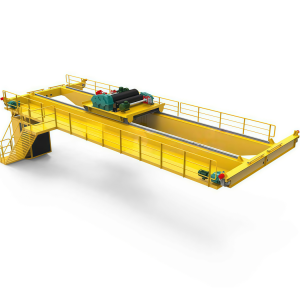

In the modern industrial manufacturing system, industrial manufacturing cranes are indispensable core lifting equipment, penetrating every link from raw material warehousing, production and processing to finished product assembly and delivery. The rational application of industrial manufacturing cranes can significantly improve production efficiency, reduce labor intensity, and ensure the safety and stability of the production process. This article will deeply dissect the application scenarios of industrial manufacturing cranes in different industrial fields, sort out core SEO keywords, and provide professional and original content references for industry practitioners, procurement personnel and technical researchers.
I. Core Application Scenarios of Industrial Manufacturing Cranes
Industrial manufacturing covers a wide range of fields, including machinery manufacturing, automobile production, aerospace, electronic equipment manufacturing, and light industry processing. Different fields have different requirements for the performance, tonnage and function of cranes, and industrial manufacturing cranes have formed a variety of types to adapt to diverse working conditions.
1. Machinery Manufacturing Industry: Core Support for Heavy Component Processing & Assembly
The machinery manufacturing industry involves the processing and assembly of large and heavy components such as machine tool beds, engine blocks, and hydraulic cylinders. These components have the characteristics of large volume, heavy weight and high precision requirements, and industrial manufacturing cranes play a vital role in the production process.
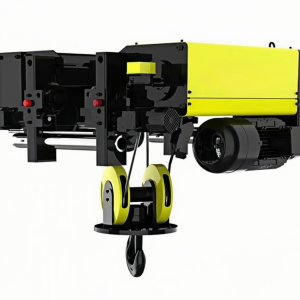
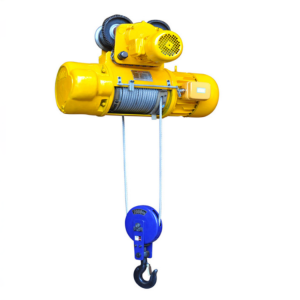
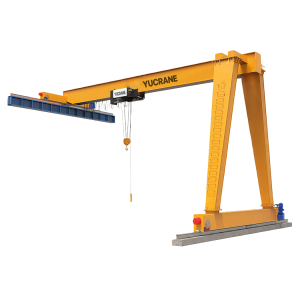
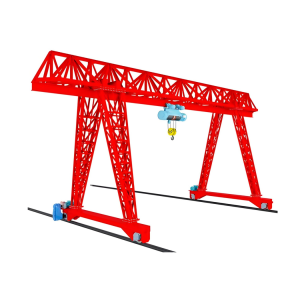
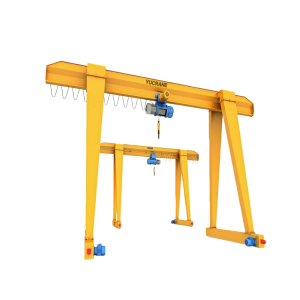
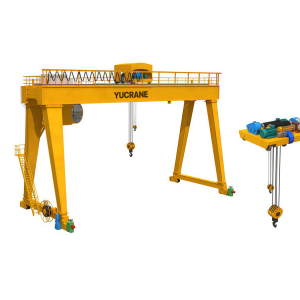
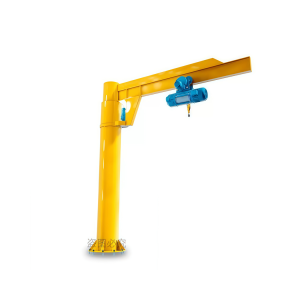
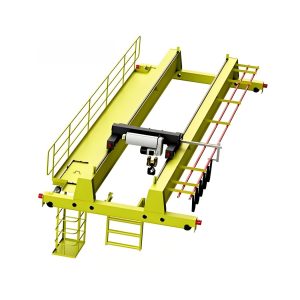
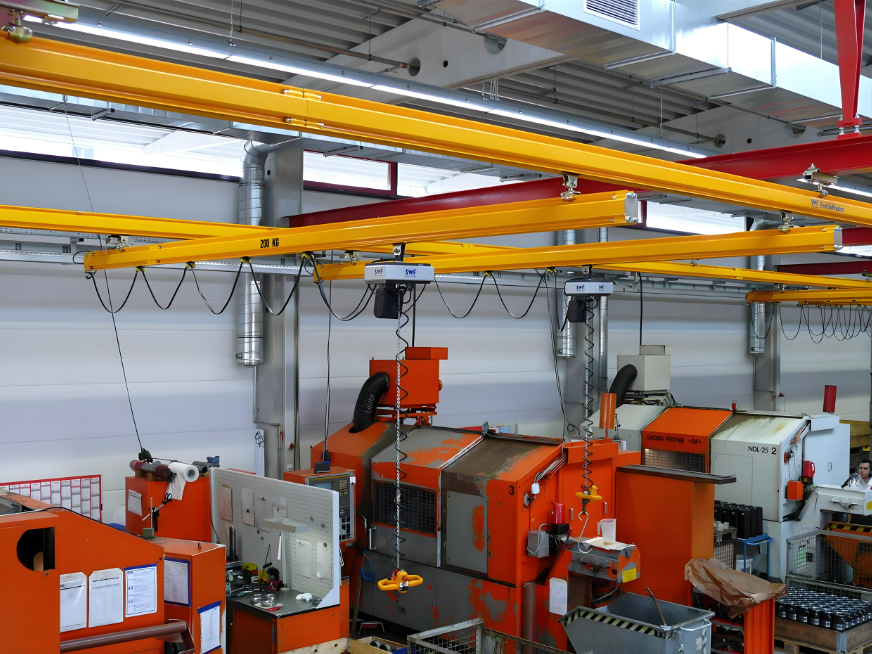
In the processing link, bridge cranes and gantry cranes in industrial manufacturing cranes are responsible for hoisting raw materials (such as steel ingots, steel plates) to processing equipment (such as CNC machine tools, boring machines) for positioning and clamping. During the assembly process, jib cranes and electric hoists (a type of light industrial manufacturing crane) are used for precise hoisting and butt joint of small and medium-sized parts, while large-tonnage bridge cranes or gantry cranes are used for integral hoisting and assembly of large equipment. For example, in the production of large construction machinery, industrial manufacturing cranes complete the hoisting of components such as booms and frames, ensuring the accuracy and efficiency of assembly.
In addition, industrial manufacturing cranes in the machinery manufacturing industry are usually equipped with precision positioning systems and anti-swing devices to avoid collisions and scratches of high-precision components during hoisting, ensuring product quality.
2. Automobile Manufacturing Industry: Efficient Link for Automated Production Lines
The automobile manufacturing industry is characterized by high automation, high efficiency and large-scale production. Industrial manufacturing cranes are closely integrated with automated production lines, undertaking tasks such as material transportation, body hoisting and component assembly, and realizing the seamless connection of each production link.
In the stamping workshop, gantry cranes and overhead cranes in industrial manufacturing cranes are responsible for hoisting steel coils to stamping equipment, and transferring stamped parts (such as door panels, fenders) to the next process. In the welding workshop, robotic cranes and electric hoists cooperate with welding robots to complete the hoisting and positioning of auto body parts, ensuring the accuracy of welding positions. In the final assembly workshop, assembly line cranes and monorail cranes (a type of industrial manufacturing crane) are used for hoisting engines, transmissions and other key components to the body for assembly, and finally hoisting the finished vehicles to the inspection area or storage yard.
With the development of intelligent manufacturing, more and more industrial manufacturing cranes in the automobile manufacturing industry are connected to the MES production management system, realizing automatic scheduling, path optimization and real-time monitoring, further improving the intelligence level of the production line.
3. Aerospace Industry: High-Precision Guarantee for Special Component Production
The aerospace industry has extremely high requirements for product precision, reliability and safety, and the production process involves special materials (such as titanium alloys, composite materials) and precision components (such as aircraft engines, wing structures). Industrial manufacturing cranes used in this field must have the characteristics of high precision, low vibration and strong stability.
In the processing of aerospace components, precision electric hoists and clean room cranes (a type of industrial manufacturing crane) are used for hoisting and transferring precision blanks and processed parts. These cranes adopt special structural designs to avoid dust generation and ensure the cleanliness of the production environment. In the assembly of aircraft and rockets, large-tonnage and high-precision bridge cranes are used for integral hoisting of components such as fuselages and rocket stages. The hoisting accuracy can reach millimetre level, ensuring the precise docking of components.
In addition, industrial manufacturing cranes in the aerospace industry are equipped with multiple safety protection systems, such as overload protection, emergency braking and real-time monitoring, to ensure the safety of hoisting operations of high-value components.
4. Electronic Equipment Manufacturing Industry: Lightweight & Precise Hoisting Solution
The electronic equipment manufacturing industry (such as mobile phone, computer and semiconductor production) mainly involves small and lightweight components, with high requirements for the cleanliness and stability of the production environment. industrial manufacturing cranes used in this field are mostly lightweight, low-noise and clean-type equipment.
In the SMT (Surface Mount Technology) production line, small jib cranes and electric hoists in industrial manufacturing cranes are responsible for hoisting and transferring PCB boards, component trays and other materials. These cranes have the characteristics of flexible operation and precise positioning, which can adapt to the fast-paced production rhythm of electronic equipment. In the production of semiconductor chips, clean room cranes (a type of industrial manufacturing crane) are used for hoisting and transferring silicon wafers, masks and other precision components. The equipment adopts anti-static and dust-free designs to avoid damaging the chips.
5. Light Industry & Daily Necessities Manufacturing Industry: Flexible Adaptation to Diversified Production
The light industry and daily necessities manufacturing industry (such as textile, food, packaging and printing) has the characteristics of diversified product types, small single-piece weight and flexible production methods. industrial manufacturing cranes used in this field are mostly small and medium-sized, with strong flexibility.
In the textile industry, monorail cranes and electric hoists in industrial manufacturing cranes are used for hoisting and transferring textile raw materials (such as cotton bales, chemical fibers) and semi-finished products (such as yarn rolls, cloth rolls). In the food processing industry, stainless steel cranes (a type of industrial manufacturing crane) that meet food safety standards are used for hoisting and transferring raw materials and finished products. These cranes are corrosion-resistant, easy to clean and avoid cross-contamination of food. In the packaging and printing industry, jib cranes and small gantry cranes are used for hoisting and transferring printing rolls, packaging materials and finished products, improving production efficiency.
II. Core Value of Industrial Manufacturing Cranes in Production
As an important part of the industrial manufacturing production system,industrial manufacturing cranes not only undertake the basic task of material hoisting, but also play a key role in improving production efficiency, ensuring product quality and ensuring production safety. With the development of intelligent manufacturing, industrial manufacturing cranes are constantly upgrading towards intelligence, automation and customization, such as the integration of IoT technology to realize remote monitoring and predictive maintenance, and the development of special cranes for specific industries to meet more refined production needs. In the future, industrial manufacturing cranes will be more closely integrated with industrial production, contributing more to the high-quality development of the industrial manufacturing industry.