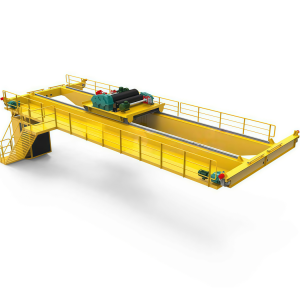

In the entire production process of the iron and steel metallurgy industry, steel metallurgy cranes serve as core heavy-duty equipment, undertaking key tasks such as material hoisting, process connection, and equipment maintenance. From the transfer of raw materials after iron ore mining, to the handling of high-temperature materials in steelmaking and rolling processes, and then to the warehousing and transportation of finished products, the stable operation of steel metallurgy cranes directly affects production efficiency, product quality, and operational safety. This article will detail the core application scenarios of steel metallurgy cranes in the iron and steel metallurgy industry, and sort out SEO optimization keywords to provide comprehensive references for industry practitioners and relevant demanders.
Core Application Scenarios of Steel Metallurgy Cranes
The iron and steel metallurgy production process is complex and operating conditions are harsh, involving various challenges such as high temperature, dust, heavy load, and corrosive environments. The performance requirements of cranes vary in different production links. Through targeted structural design and functional optimization, steel metallurgy cranes adapt to the operational needs of each link, forming a full-process hoisting guarantee system.
1. Raw Material Processing Link: Core of Material Transfer Laying the Foundation for Production
Raw material processing is the starting link of iron and steel production, mainly including the unloading, warehousing, homogenization, and transfer of raw materials such as iron ore, coke, and limestone. This link has a large workload and a variety of materials, requiring high load-bearing capacity and operational efficiency of cranes.
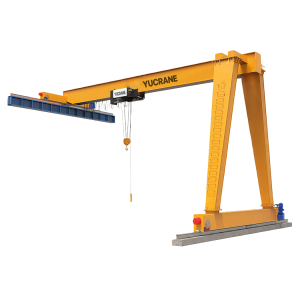
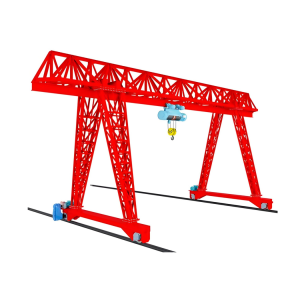
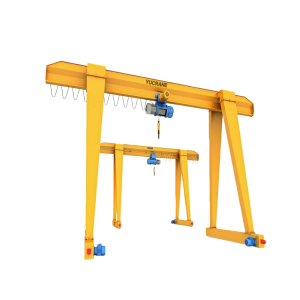
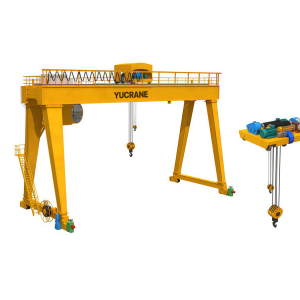
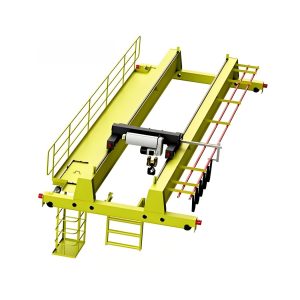
Gantry cranes and overhead cranes among steel metallurgy cranes are the main equipment in this link. At ports or raw material yards, gantry cranes are responsible for unloading arriving raw materials from ships, trains, and trucks, and transferring them to raw material warehouses or homogenization yards; in homogenization yards, overhead cranes cooperate with homogenization equipment to complete the mixing and homogenization of raw materials, ensuring the uniform composition of subsequent smelting raw materials. In addition, for the long-distance transfer of bulk raw materials, suspended cranes are used in some scenarios to realize the precise transportation of raw materials between different warehousing areas and production entrances.
In this link, steel metallurgy cranes need to have dust resistance and impact resistance performance. Some equipment is also equipped with anti-deviation and overload protection devices to avoid equipment failures and safety accidents caused by material scattering or overloading.
2. Smelting Link: Precise Hoisting Guarantee Under High-Temperature Working Conditions
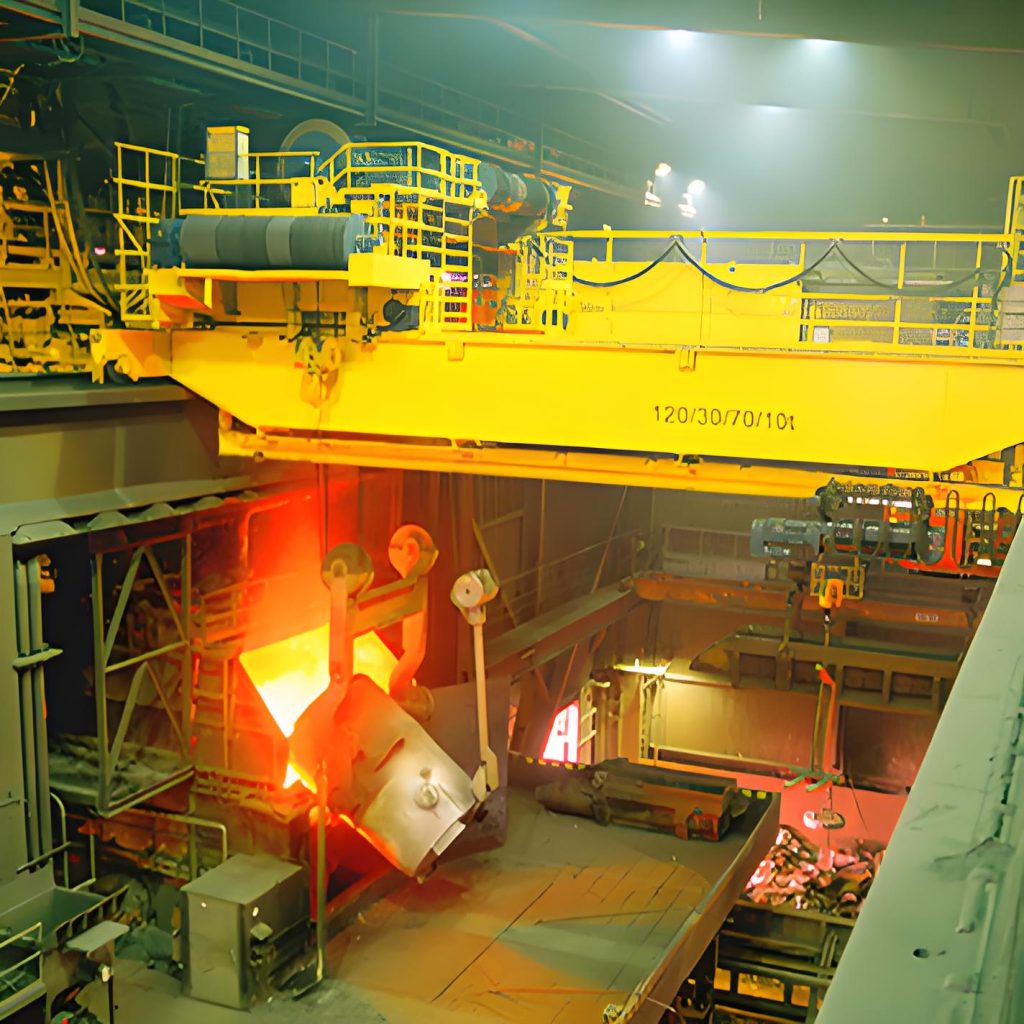
The smelting link is the core of iron and steel production, including key processes such as blast furnace ironmaking, converter steelmaking, and electric furnace steelmaking. The working conditions are extremely challenging—not only need to cope with high-temperature environments above 1000℃, but also hoist high-temperature molten materials such as molten iron and molten steel, requiring high temperature resistance, stability, and precision of cranes.
In the blast furnace ironmaking process, special blast furnace cranes among steel metallurgy cranes are responsible for hoisting and feeding coke and ore to the top of the blast furnace, and at the same time transporting molten iron tanks and slag tanks during blast furnace tapping. This type of crane adopts high-temperature resistant materials and heat insulation protection design to avoid damage to equipment components caused by high-temperature radiation, and is equipped with a high-precision positioning system to ensure that materials are accurately put into the blast furnace and avoid spilling.
In the converter steelmaking and electric furnace steelmaking processes, converter cranes and electric furnace cranes are core equipment. Converter cranes are responsible for hoisting molten iron tanks to the converter mouth for iron charging, and then hoisting molten steel tanks to continuous casters or refining furnaces after steelmaking; electric furnace cranes mainly undertake the hoisting and feeding of scrap steel and the transfer of molten steel tanks. To cope with the hoisting risks of high-temperature molten materials, this type of steel metallurgy crane is equipped with multiple safety devices such as double braking, anti-overturning, and anti-high-temperature radiation. Some high-end equipment has also realized remote control, reducing the exposure time of operators in high-temperature environments.
3. Steel Rolling and Finished Product Processing Link: Precision Connection Equipment for Improving Product Quality
The steel rolling link is a key process for processing steel billets into finished products such as steel plates, section steels, and steel pipes, involving multiple steps such as steel billet heating, rolling, cooling, and straightening; the finished product processing link includes shearing, inspection, packaging, warehousing, and transportation of finished products. These two links have high requirements for the operational precision and stability of cranes to avoid surface scratches or dimensional deviations of products caused by hoisting shaking.
In the steel rolling link, slab cranes and section steel cranes among steel metallurgy cranes are responsible for hoisting steel billets from heating furnaces to rolling mills, and then hoisting rolled semi-finished products to cooling areas or straightening machines. This type of crane adopts frequency conversion speed regulation technology and precise positioning system to realize the stable hoisting, transfer, and lowering of steel billets, ensuring the precise connection between steel billets and equipment such as rolling mills and straightening machines.
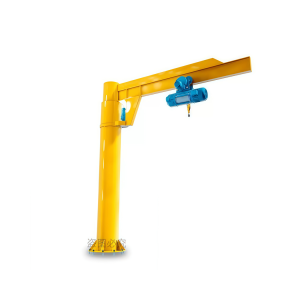
In the finished product processing link, overhead cranes, jib cranes, and other steel metallurgy cranes are responsible for the hoisting, inspection, packaging, warehousing, and transportation of finished products. For example, in the steel plate warehousing area, cranes hoist finished steel plates to designated shelves for storage or transfer to transport vehicles; on the steel pipe production line, jib cranes cooperate with packaging equipment to complete the bundling and hoisting of steel pipes. To protect the surface quality of finished products, the spreaders of this type of crane adopt a flexible design to avoid direct hard contact with finished products, and are equipped with a stable operation control system to reduce shaking during hoisting.
4. Equipment Maintenance Link: Maintenance Support for Ensuring Production Continuity
Iron and steel metallurgy production equipment is large and complex, such as blast furnaces, converters, rolling mills, etc. Regular maintenance is the key to ensuring production continuity. In the equipment maintenance link, steel metallurgy cranes are responsible for the disassembly, hoisting, and installation of large equipment components, requiring high hoisting capacity and operational flexibility of cranes.
For example, during blast furnace maintenance, large overhead cranes are responsible for disassembling and hoisting blast furnace top equipment, furnace body components, etc., to the maintenance area, and then hoisting new components or maintained components back to their positions after maintenance; during rolling mill maintenance, cranes cooperate with maintenance personnel to replace vulnerable components such as rolls and bearings. This type of steel metallurgy crane usually has large-tonnage hoisting capacity and is equipped with rotatable and telescopic spreaders to adapt to the hoisting needs of equipment components of different shapes and weights.