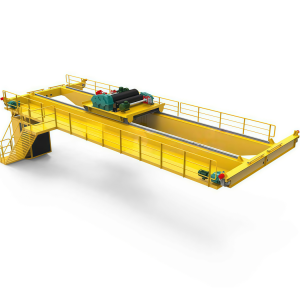

Cranes serve as indispensable key lifting and handling equipment throughout the whole life cycle of Water Conservancy Power projects, covering construction, installation, operation and maintenance. They undertake heavy-load hoisting, precise component docking, material transportation and emergency rescue tasks, adapting to complex working conditions such as water areas, high altitudes, large spans and heavy loads. Below is a detailed classification of applications combined with typical scenarios and functional characteristics.
I. Applications in Water Conservancy Power Project Construction Phase
This stage is the period with the most frequent and diverse crane usage, matching the construction of dams, spillways, powerhouses, diversion tunnels and other main structures.
1. Handling of Building Materials and Prefabricated Components
- Bulk basic materials: Hoist cement, steel bars, sand and gravel, formwork and other raw materials from the ground storage yard to the construction operation surface of dams, flood discharge structures and hydraulic tunnels, solving the problem of vertical and horizontal transportation in high-rise and large-volume structures.
- Prefabricated parts: Lift precast concrete blocks, anti-scour slabs, steel arch frames and other prefabricated components to the designated installation position, improving assembly efficiency and construction accuracy.
2. Construction of Earth-rock Cofferdams and Foundation Works
- Cooperate with pile drivers, excavators and other equipment to hoist steel sheet piles, concrete piles and cofferdam components to build temporary water-retaining cofferdams, creating dry construction conditions for the foundation pit and dam foundation of hydropower stations.
- Hoist foundation treatment equipment such as high-pressure jet grouting rigs to the designated area for dam foundation anti-seepage and reinforcement construction.
3. Dam Construction & Installation
- For concrete gravity dams/arch dams: Cooperate with concrete mixing systems to lift concrete mixing materials to the pouring layer, and assist in the installation and disassembly of large formwork and embedded parts.
- For earth-rockfill dams: Transport filling materials to designated dam sections, and hoist slope protection structures, seepage prevention membranes and other auxiliary facilities.
II. Applications in Electromechanical Equipment Installation Phase
This is the link with high requirements for hoisting accuracy and load capacity, mainly for the installation of core electromechanical equipment of hydropower stations.
1. Hoisting of Hydraulic Turbine and Generator Components
- Hoist super-heavy and large-size core components such as the generator rotor, stator, turbine runner, main shaft and top cover in the powerhouse. The single lifting weight can reach hundreds of tons, and special large cranes are required to cooperate with precise positioning.
- Complete the coaxial docking and position adjustment of rotating components, which is a prerequisite for the stable operation of the generating unit.
2. Installation of Auxiliary Mechanical and Electrical Systems
- Hoist auxiliary equipment such as speed governers, excitation devices, transformers, high-voltage switch cabinets, pressure steel pipes and penstock components to the installation platform.
- Cooperate with the installation of pipeline systems, hoisting valve groups (gate valves, ball valves, check valves) and pipeline sections to connect the water delivery and drainage system of the power station.
3. Hoisting of Flood Discharge and Regulation Equipment
- Hoist and install large-scale regulating structures such as radial gates, flat gates, bulkhead gates and trash racks of spillways, flood discharge tunnels and sluices.
- Cooperate with the installation of hoists, hydraulic operating devices and other gate control equipment to ensure the flexible opening and closing of flood discharge structures.
III. Applications in Water Conservancy Power Project Operation and Maintenance Phase
Cranes are used as fixed supporting equipment in the long-term operation of water conservancy and hydropower projects, undertaking daily maintenance and fault repair tasks.
1. Daily Overhaul of Generating Units
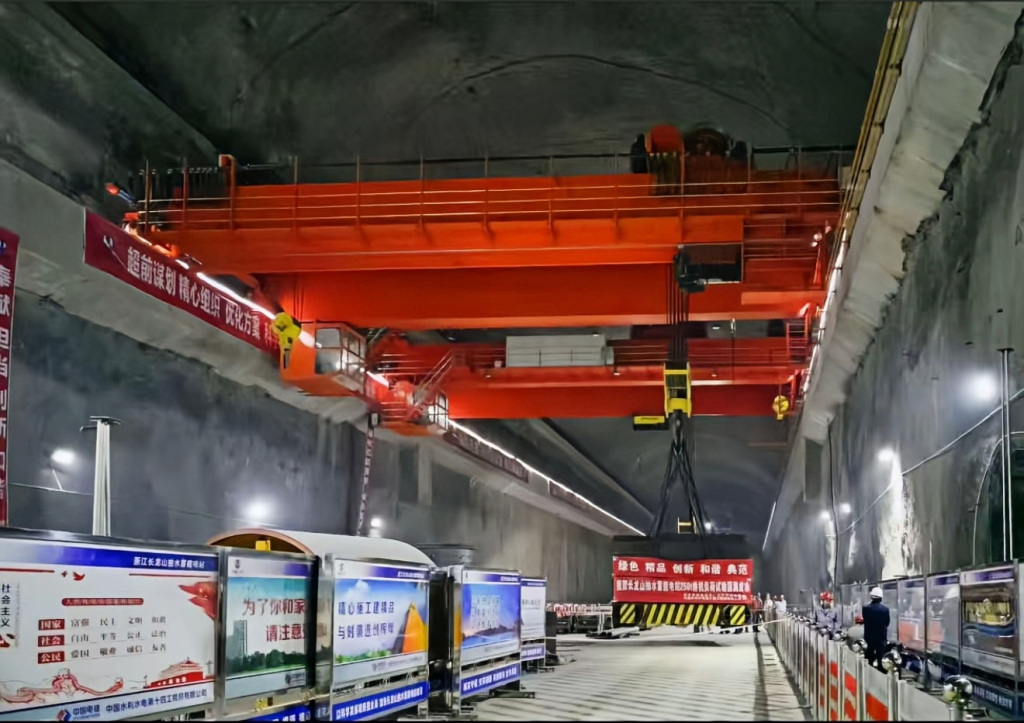
- The bridge cranes configured in the powerhouse workshop undertake the disassembly, hoisting and replacement of vulnerable parts such as turbine bearings, sealing parts, generator brushes and coolers during routine maintenance.
- Assist in component hoisting during unit A/B/C overhaul, realizing rapid disassembly and assembly to shorten the outage maintenance period.
2. Maintenance of Gates and Flood Discharge Facilities
- Hoist and lift the trash racks to clean up floating debris, branches and gravel accumulated on the surface, ensuring the smooth water intake of the power station.
- Lift the gate body for anti-corrosion treatment, sealing replacement, structural reinforcement and fault troubleshooting of the opening and closing mechanism.
3. Replacement of Large Damaged Components
When key equipment such as the turbine runner, stator winding and high-voltage transformer fails and needs overall replacement, fixed cranes complete the hoisting of old and new components, which is an essential guarantee for the recovery of power generation capacity.
IV. Applications in Emergency Rescue and Disaster Relief
Water Conservancy Power projects undertake flood control, drought relief and water dispatching functions, and cranes play an important role in emergency disposal:
- Hoist sandbags, stone blocks, steel sheet piles and other emergency materials for emergency reinforcement, plugging and danger elimination of dangerous dam sections, sluice holes and river embankments during flood periods.
- Lift and transfer emergency power generation equipment, water pumping equipment and rescue tools in disaster-stricken water conservancy facilities to assist in post-disaster repair and recovery of water supply and power supply functions.
V. Common Crane Types Adapted to the Water Conservancy Power Industry
Different types of cranes are matched with different working conditions and load requirements, and the commonly used models are as follows:
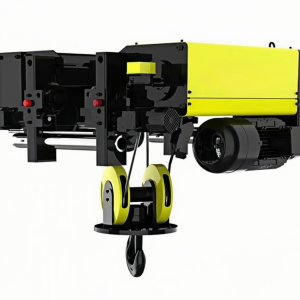
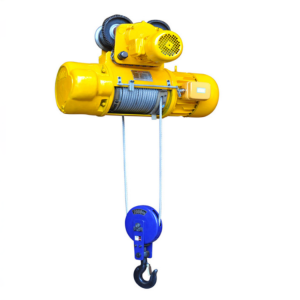
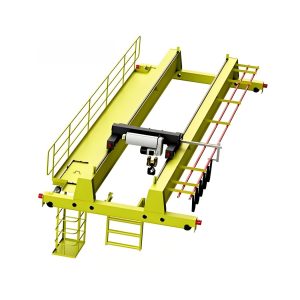
- Bridge Cranes (Overhead Cranes): Fixed in the powerhouse maintenance workshop, mainly for the overhaul and installation of generator units, with large rated lifting capacity and high positioning accuracy.
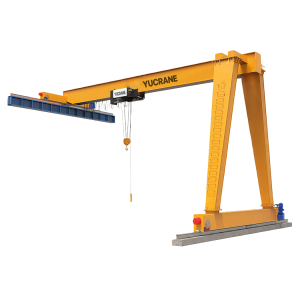
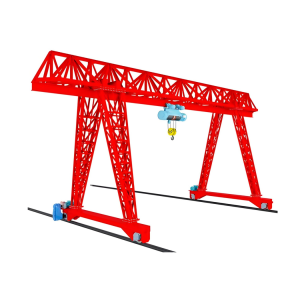
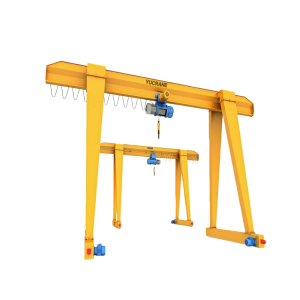
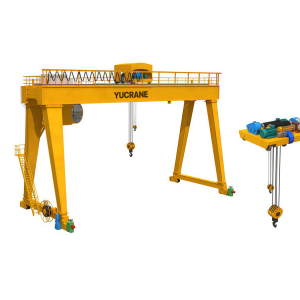
- Gantry Cranes / Portal Cranes: Used in outdoor dam construction areas, spillway installation sites and material storage yards, suitable for open-air large-span hoisting operations.
- Truck Cranes & Crawler Cranes: Mobile cranes with strong flexibility, used for scattered construction, emergency rescue and temporary hoisting tasks in the early stage of the project; crawler cranes are suitable for complex terrain such as soft soil and slopes.
- Tower Cranes: Applied to the construction of high-rise dam bodies and powerhouse structures, undertaking long-term and fixed-point vertical transportation of materials and small components.
- Special Hydraulic Cranes: Customized anti-corrosion, moisture-proof and explosion-proof cranes for special environments such as underground powerhouses and hydraulic tunnel construction, adapting to high humidity and water vapor erosion conditions.
VI. Core Value in Water Conservancy Power
Full Life Cycle Coverage: Run through the whole process of construction, installation, operation and emergency disposal, which is the key basic equipment for the construction and stable operation of water conservancy and hydropower projects.
Efficiency Improvement: Solve the hoisting problem of super-heavy and large-size components that cannot be completed by manual and conventional machinery, and greatly shorten the construction and maintenance period.
Precision Guarantee: Meet the high-precision docking requirements of electromechanical units and gate equipment, ensuring the operation stability of the project.
Safety Assurance: Standardized hoisting operations reduce high-risk manual handling, and adapt to complex and harsh water conservancy construction environments.